
North Carolina Trial Court Divisions
North Carolina uses a unified court system. There are no county courts at law and no justice-of-the-peace courts. Two trial-court divisions share the work: Superior Court and District Court. Each has a clear jurisdiction, and most cases begin at the District Court level before moving up to Superior Court when the law requires it or when an appeal is filed.
Superior Court is the general-jurisdiction trial court. It takes felony criminal cases, civil cases above the District Court dollar threshold, appeals from District Court, and certain agency appeals. A judge presides, and criminal defendants who go to trial have the right to a jury. District Court sits below Superior Court. It handles misdemeanors, traffic infractions, domestic matters, juvenile cases, small claims, and civil cases under the monetary limit set by state law. The NC Judicial Branch structure of the courts page gives the full hierarchy. The courts overview describes each division in detail.
The key difference in daily practice is this: if you were charged with a felony, your case will move through District Court briefly and then land in Superior Court after indictment. Misdemeanors stay in District Court unless you appeal. Traffic infractions are heard in District Court. Magistrates handle some matters without a full hearing, such as initial appearances after arrest, small claims up to the statutory limit, and summary ejectment (eviction) proceedings.
Cumberland County and District 14
Cumberland County carries a single district number across all three court designations. The county is Prosecutorial District 14, Superior Court District 14, and District Court District 14. That alignment means the District Attorney who prosecutes in District Court also prosecutes in Superior Court for the same district, and both trial divisions share the courthouse address and many of the same support offices.
The table below shows every trial-court office and support function at the main courthouse, with the direct phone number for each. All offices share the physical address of the Judge E. Maurice Braswell Cumberland County Courthouse at 117 Dick Street, Fayetteville, NC 28301. The general courthouse line is (910) 475-3000. For the full contact directory, visit the official Cumberland County court contact directory.
| Office | Role | Address | Phone |
|---|---|---|---|
| Clerk of Superior Court | Court record custodian; filings; official copies; estates/probate | 117 Dick St., Fayetteville, NC 28301 | (910) 475-3000 |
| Superior Court Judges | Superior Court trial division | 117 Dick St., Fayetteville, NC 28301 | (910) 475-3016 |
| District Court Judges | District Court trial division | 117 Dick St., Fayetteville, NC 28301 | (910) 475-3012 |
| District Attorney | Prosecutes state criminal matters in District 14 | 117 Dick St., Fayetteville, NC 28301 | (910) 475-3010 |
| Magistrates | Initial appearances, warrants/orders, small claims, statutory matters | 117 Dick St., Fayetteville, NC 28301 | (910) 475-3600; alt (910) 475-3038 |
| Family Court | Domestic and family case administration | 117 Dick St., Fayetteville, NC 28301 | (910) 475-3015 |
| Custody Mediation | Custody mediation program | 117 Dick St., Fayetteville, NC 28301 | (910) 475-3014 |
| Guardian ad Litem | GAL program for children in court proceedings | 117 Dick St., Fayetteville, NC 28301 | (910) 475-3021 |
| Trial Court Administrator | Trial court administration and scheduling | 117 Dick St., Fayetteville, NC 28301 | (910) 475-3018 |
Superior Court vs District Court in Cumberland County
Both courts sit inside the same courthouse, but they take different kinds of cases. The chart below shows the main differences. Appeals from District Court go to Superior Court, and appeals from Superior Court go to the North Carolina Court of Appeals, not back down the ladder.
| Superior Court | District Court | |
|---|---|---|
| Jurisdiction level | General jurisdiction | Limited jurisdiction |
| Criminal case types | Felonies; Class A misdemeanors appealed from District Court | Misdemeanors; infractions; traffic citations; DWI |
| Civil case types | Civil cases above District Court dollar limit; complex civil matters; agency appeals | Civil cases up to the statutory dollar limit; small claims appeal path |
| Family cases | Equitable distribution above limits; some domestic appeals | Divorce; custody; support; domestic violence protective orders; juvenile |
| Jury | 12-member jury for felony trials; 12-member for most civil trials | Bench trial (judge decides); jury available only on appeal to Superior Court |
| Examples | Murder, robbery, drug trafficking, large fraud, real-property disputes over monetary threshold | Speeding tickets, simple assault, DWI, custody hearings, evictions, small claims |
| Appeals path | North Carolina Court of Appeals, then NC Supreme Court | Superior Court (de novo review), then NC Court of Appeals |
Note: civil dollar thresholds are set by state statute and subject to legislative change; verify current limits at the NC Judicial Branch courts page before relying on a specific amount.
How a Case Moves Through the System
State court cases in Cumberland County follow a defined path depending on whether the charge is criminal or civil. The flow below applies to most felony criminal matters. Civil and family cases follow a parallel track that starts with the filing of a complaint or petition at the Clerk of Superior Court's office.
Felony criminal flow:
- Arrest and magistrate review. After arrest, the defendant appears before a magistrate for an initial appearance. The magistrate sets conditions of release, including bail, and advises the defendant of the charges. Magistrates also handle arrest warrants, orders for arrest, and certain small claims matters as District Court judicial officers.
- District Court preliminary hearing. Felony charges are first assigned a District Court case number. A probable-cause hearing may be held, or the case may proceed directly to grand jury consideration.
- Grand jury indictment. The District Attorney presents evidence to a grand jury. If the grand jury finds probable cause, it issues a true bill of indictment, and the case moves to Superior Court.
- Superior Court arraignment. The defendant enters a plea. If the plea is not guilty, the case is scheduled for pretrial proceedings and eventually trial.
- Pretrial motions and discovery. Both sides exchange evidence and argue pretrial motions before the Superior Court judge.
- Trial. A 12-member jury hears the case, or the defendant may waive jury and have a bench trial. The judge presides.
- Sentencing. If convicted, the judge imposes sentence under North Carolina's structured-sentencing law.
- Appeal. Appeals from Superior Court go to the North Carolina Court of Appeals, and from there to the North Carolina Supreme Court on qualifying questions.
Case flow diagram: District Court › Superior Court › North Carolina Court of Appeals › North Carolina Supreme Court
Misdemeanor and infraction cases stay in District Court unless the defendant appeals. A District Court appeal gives the defendant a fresh trial (de novo) in Superior Court. For more on searching case records at any stage, see Cumberland County court records and court dockets.
District Court Case Types in Cumberland County
District Court handles the highest volume of cases. Most people who interact with the court system go through District Court first, whether for a traffic ticket, a custody hearing, or a misdemeanor charge. The court operates bench trials, meaning a judge decides the outcome rather than a jury.
Criminal matters in District Court include Class 1 through Class 3 misdemeanors, infractions, traffic violations, DWI (driving while impaired) charges, and certain alcohol offenses. DWI cases in particular get heavy scheduling in District Court because North Carolina requires a judge to preside over DWI trials and mandates specific procedural steps before disposition. Defendants convicted of a misdemeanor in District Court have 30 days to appeal for a de novo trial in Superior Court.
Civil and family matters are where District Court handles the most varied work. Divorce filings, child custody and support orders, domestic violence protective orders, adoptions, juvenile delinquency proceedings, abuse and neglect cases, and most small-claims matters all land here first. Family Court in Cumberland County administers the domestic docket, and the Custody Mediation program is offered through the courthouse for eligible cases. The NC Judicial Branch court officials page explains the roles of district court judges and magistrates in more detail.
- Misdemeanors and traffic infractions
- DWI/DUI criminal charges
- Divorce and equitable distribution filings
- Child custody, support, and modification proceedings
- Domestic violence civil and criminal matters
- Juvenile delinquency, abuse, neglect, and dependency cases
Records for District Court cases are searchable through the NC eCourts Portal. Some juvenile and domestic-violence records carry access restrictions. For traffic citation records specifically, see the Cumberland County traffic court records page.
Magistrates in Cumberland County
Magistrates are judicial officers of the District Court division. They are not elected; they are appointed and serve under the supervision of the Chief District Court Judge. Despite the lower profile, magistrates handle some of the most immediate and time-sensitive functions in the courthouse.
After an arrest, the arresting officer typically brings the defendant before a magistrate for an initial appearance. The magistrate informs the defendant of the charges, advises them of the right to counsel, and sets conditions of release including bail. If the charge is a minor offense, the magistrate may be authorized to accept a guilty plea and impose the penalty. Magistrates also issue arrest warrants and search warrants when law enforcement presents sufficient evidence of probable cause. For civil matters, magistrates hear small claims cases up to the statutory dollar limit and preside over summary ejectment (eviction) proceedings, both of which fall under the District Court umbrella.
The main magistrate line for Cumberland County is (910) 475-3600, with an alternate at (910) 475-3038. A public magistrate line is also available through the jail at (910) 672-5610 for bond-related inquiries after arrest. Magistrate contact information is listed under the official Cumberland County court contact directory.
Note: Magistrates cannot accept guilty pleas in felony cases or set bail for capital offenses. Those matters go before a judge in open court.
Family Court and Custody Mediation
Cumberland County operates a dedicated Family Court program within the District Court division. Family Court manages the scheduling and administration of domestic cases, including divorce, custody, child support, equitable distribution, and domestic violence matters. The direct line for Family Court administration is (910) 475-3015. Local family court forms for Cumberland County are published by the NC Judicial Branch and include forms specific to the county's procedures, such as motion templates for custody continuances and mediation exemptions.
Custody Mediation is a separate program offered through the courthouse at (910) 475-3014. North Carolina requires mediation in most contested child custody cases before a trial is scheduled. A trained mediator meets with both parents to try to reach a parenting agreement without a full trial. The mediation session is confidential; what is said there cannot be used in court if mediation fails. If agreement is not reached, the custody matter proceeds to a judge. Fees for mediation may be charged based on income; verify current rules with the Custody Mediation office.
The Guardian ad Litem program, reached at (910) 475-3021, provides court-appointed volunteers to represent the best interests of children in abuse, neglect, and dependency cases. GAL volunteers investigate family circumstances and report findings to the judge. Their role is separate from the attorney appointed to represent the child legally.
The screenshot below comes from the official Cumberland County Family Opioid Court page, one of the specialty programs that works alongside Family Court in District 14.
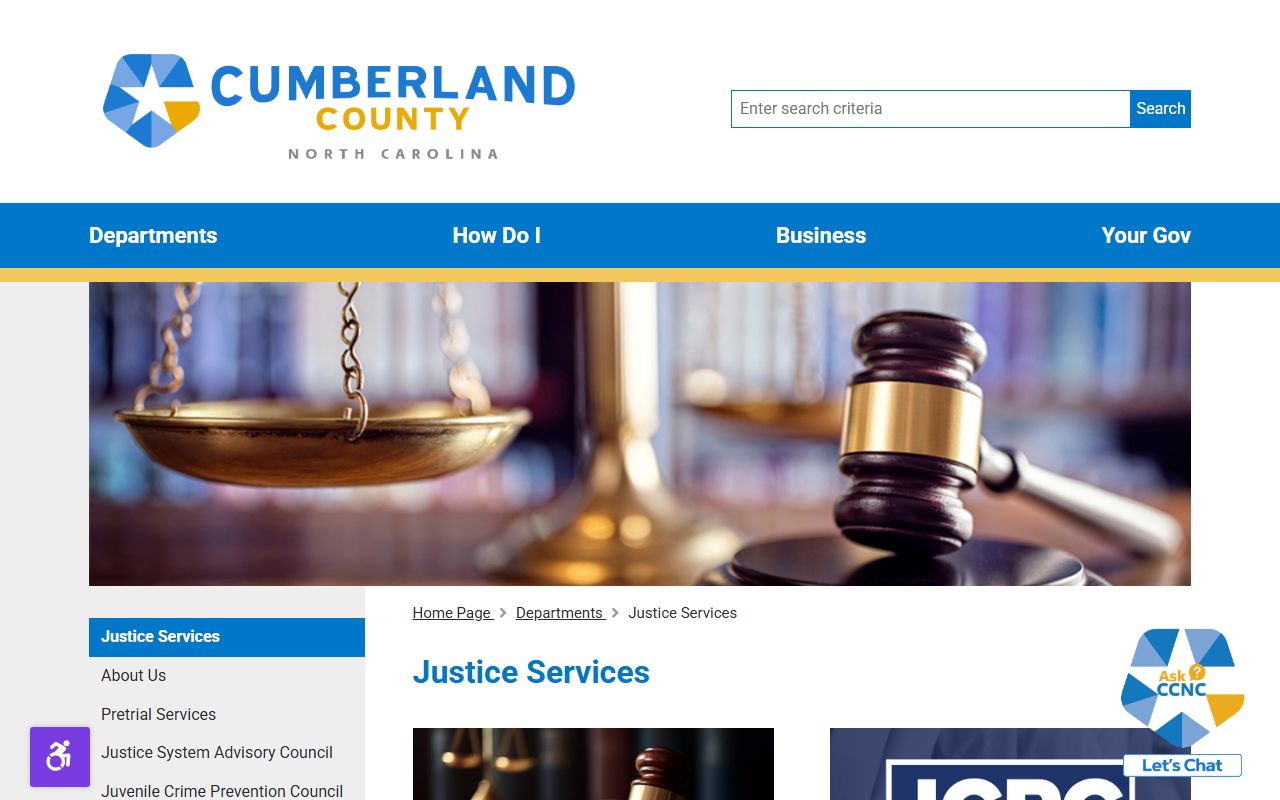
The Family Opioid Court addresses family cases where parental substance use, particularly opioid use, intersects with child welfare proceedings already active in the family court system.
Traffic and Infraction Cases in Cumberland County
Traffic citations and motor vehicle infractions are heard in District Court. Most minor traffic matters, including speeding tickets, unsafe movement, and equipment violations, are payable or contestable without appearing in court, depending on the citation. More serious traffic charges, such as reckless driving and DWI, require a court appearance and are treated as criminal cases rather than payable infractions.
The eCourts Portal allows a person to search a Cumberland County traffic citation by citation number, name, or county and check the scheduled court date and payment status. Eligible citations can be paid online, by mail, or in person at the courthouse. Mail payments must be made by money order or certified check payable to the Cumberland County Clerk of Superior Court and must include the citation number. Payments mailed to the courthouse go to PO Box 363, Fayetteville, NC 28302.
DWI and criminal traffic charges follow the criminal case flow through District Court rather than the infraction payment track. A conviction for DWI may result in license revocation by the NC Division of Motor Vehicles, a process handled separately from the court record. The court traffic record and the state driver record are two different files maintained by two different agencies. For full detail on citation lookup, payment methods, and the difference between the court record and the DMV record, see the Cumberland County traffic court records page.
Appeals from Superior Court and Beyond
After a Superior Court trial or ruling, the losing party may appeal to the North Carolina Court of Appeals. The Court of Appeals reviews the trial record for legal errors. It does not hold a new trial or hear new evidence. The court issues written opinions, and its decisions are binding on trial courts unless overturned by the NC Supreme Court.
Further review by the North Carolina Supreme Court is available in some categories of cases by right, and in others by petition for discretionary review. The Supreme Court generally takes cases to resolve significant legal questions or conflicts between Court of Appeals panels. Federal questions can eventually reach the U.S. Supreme Court, but only after the state appellate process is exhausted.
Appeals from District Court do not go directly to the Court of Appeals. A party dissatisfied with a District Court ruling first appeals to Superior Court for a de novo trial, which means the case is heard again from scratch with a fresh record. After that Superior Court proceeding, further appeals follow the standard Superior Court path upward. The NC Judicial Branch help-topics page provides guidance on appeals procedures for self-represented parties.
The screenshot below comes from the official Cumberland County Adult Drug Treatment Court page, which operates under District 14 supervision and connects to the appeals and diversion ecosystem.
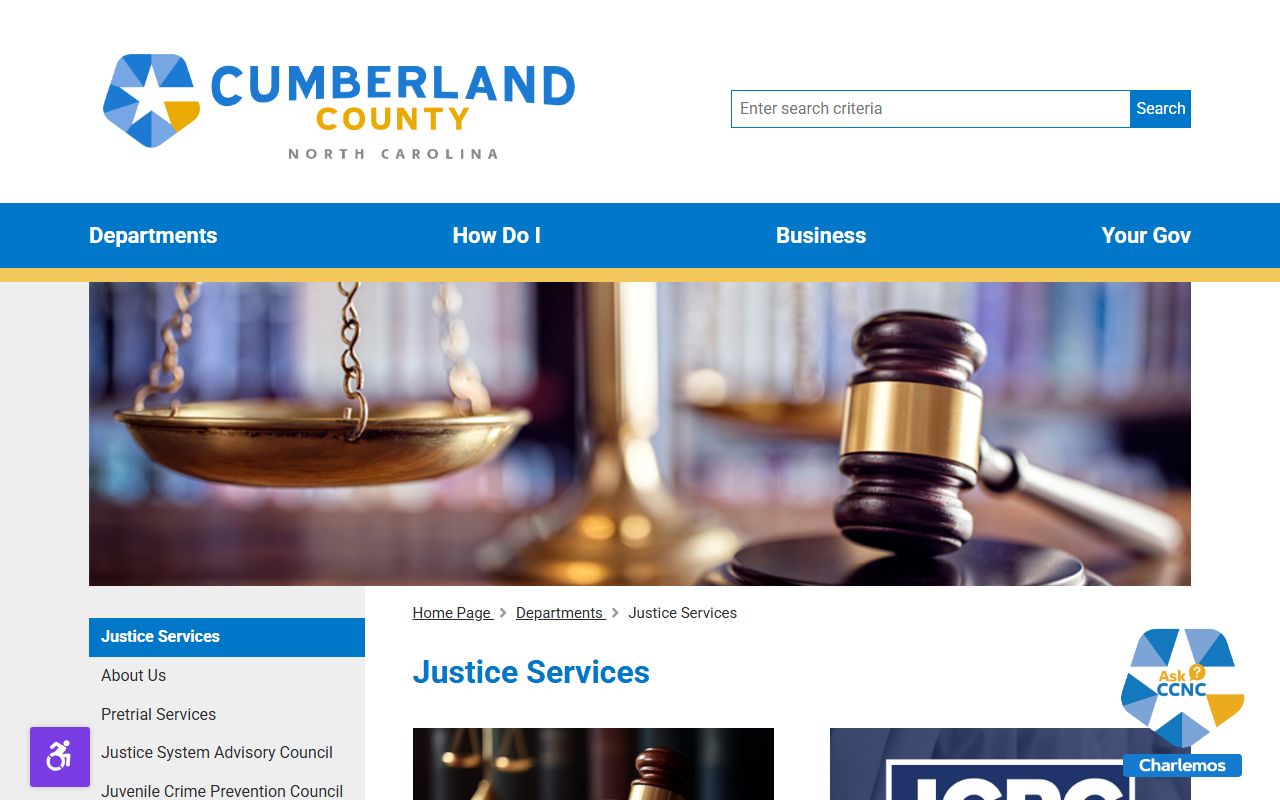
Participants who complete the Adult Drug Treatment Court program may have their underlying charges resolved without a traditional conviction, which affects what appears in the court record on appeal or background check.
Specialty Courts and Diversion Programs
Cumberland County operates several problem-solving courts and diversion programs that run alongside the standard trial docket. These courts are designed to address the root causes of criminal behavior through structured supervision, treatment, and accountability rather than traditional sentencing alone. Cases in specialty courts still appear in the court record, though disposition may differ from a standard conviction.
The NC Judicial Branch lists these related court programs for Cumberland County: Adult Treatment Court, Family Treatment Court, Veterans Treatment Court, DWI Treatment Court, and Youth Treatment Court. Cumberland County Justice Services adds Mental Health Court, WORTH Court, Family Opioid Court, and a Misdemeanor Diversion Program. For Cumberland specifically, the Veterans Treatment Court is especially relevant given the large military community around Fort Liberty and Fayetteville. The Misdemeanor Diversion Program is coordinated through county Justice Services; the coordinator is Kimberly Williams, reachable at (910) 437-1884.
The screenshot below is from the official Cumberland County Mental Health Court page, which serves defendants whose criminal matters intersect with mental health needs.
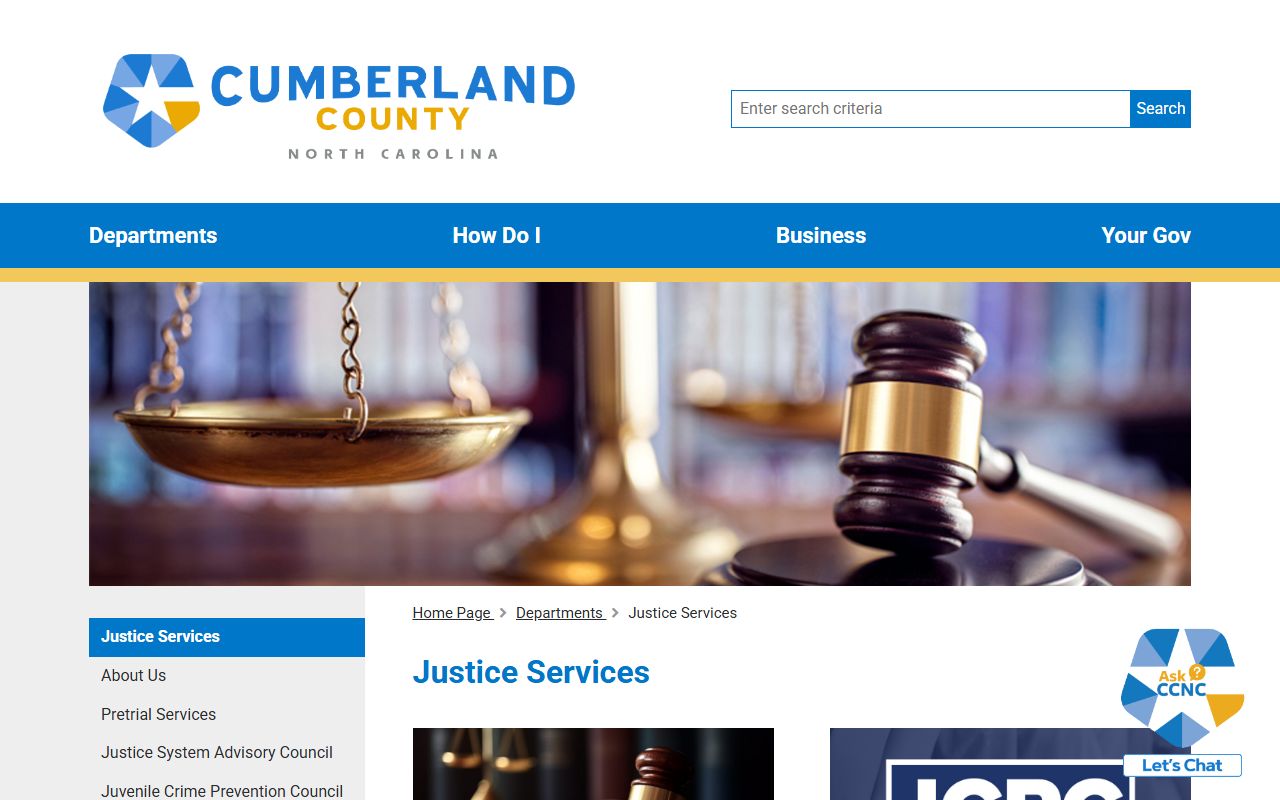
Mental Health Court provides treatment-focused oversight as an alternative to standard prosecution, with referral through the courts or the District Attorney's office for eligible participants.
The District Attorney's office at (910) 475-3010 can answer questions about eligibility for diversion. The NC Judicial Branch help topics page links general guidance on specialty courts and treatment programs statewide.
Recent Judicial Appointments in District 14
Two judicial appointments in District 14 were announced by Governor Josh Stein in the 12 months before the date of this content. In April 2025, Governor Stein appointed Tracey Henderson as District Court Judge for Judicial District 14. In December 2025, Alicia Marks Flowers was appointed to Superior Court District 14B, filling a vacancy on the Superior Court bench in Cumberland County. Both appointments were reported on the NC Judicial Branch news page linked to the Cumberland County location.
On the technology side, Cumberland County was included in the June 2025 deployment of eCourts kiosks to North Carolina courthouses. The kiosks at the Braswell Courthouse are equipped with scanners, printers, and payment functionality, giving courthouse visitors a way to access eCourts Portal features and print case documents without a personal device. The kiosk deployment is part of the broader statewide rollout of the Odyssey case management system and Portal access points.
For the current roster of Superior Court and District Court judges assigned to District 14, the NC Judicial Branch courts page and the court officials page are the authoritative sources. Judge lists and assignments change with elections and appointments; always verify current judge assignments before a scheduled hearing.
Finding Records and Self-Help Resources
Court records for both Superior Court and District Court cases in Cumberland County are searchable through the North Carolina eCourts Portal. The Portal gives public users access to case summaries, hearing schedules, judgment information, and documents for cases that are not confidential, sealed, or otherwise restricted. A user does not need to register or pay a fee to view public records. Official copies and certified records require a request to the Clerk of Superior Court in person or by mail.
Self-help resources for people who want to file or respond in court without an attorney are available through the NC Judicial Branch. The Guide & File tool, linked from the Cumberland County NC Judicial Branch page, walks pro se filers through forms for common case types. Local rules and forms specific to Cumberland County, including family court motion templates and juvenile session forms, are posted on the Cumberland County local rules and forms page.
Legal aid options include Legal Aid of North Carolina at legalaidnc.org for civil matters, and North Carolina Indigent Defense Services at ncids.org for information about court-appointed counsel in criminal cases. The NC Bar Association also operates a lawyer referral service for people who need help finding a private attorney.
The screenshot below is from the official NC Judicial Branch help topics page, which provides guides for common court matters including divorce, custody, estates, criminal records, and expunctions.
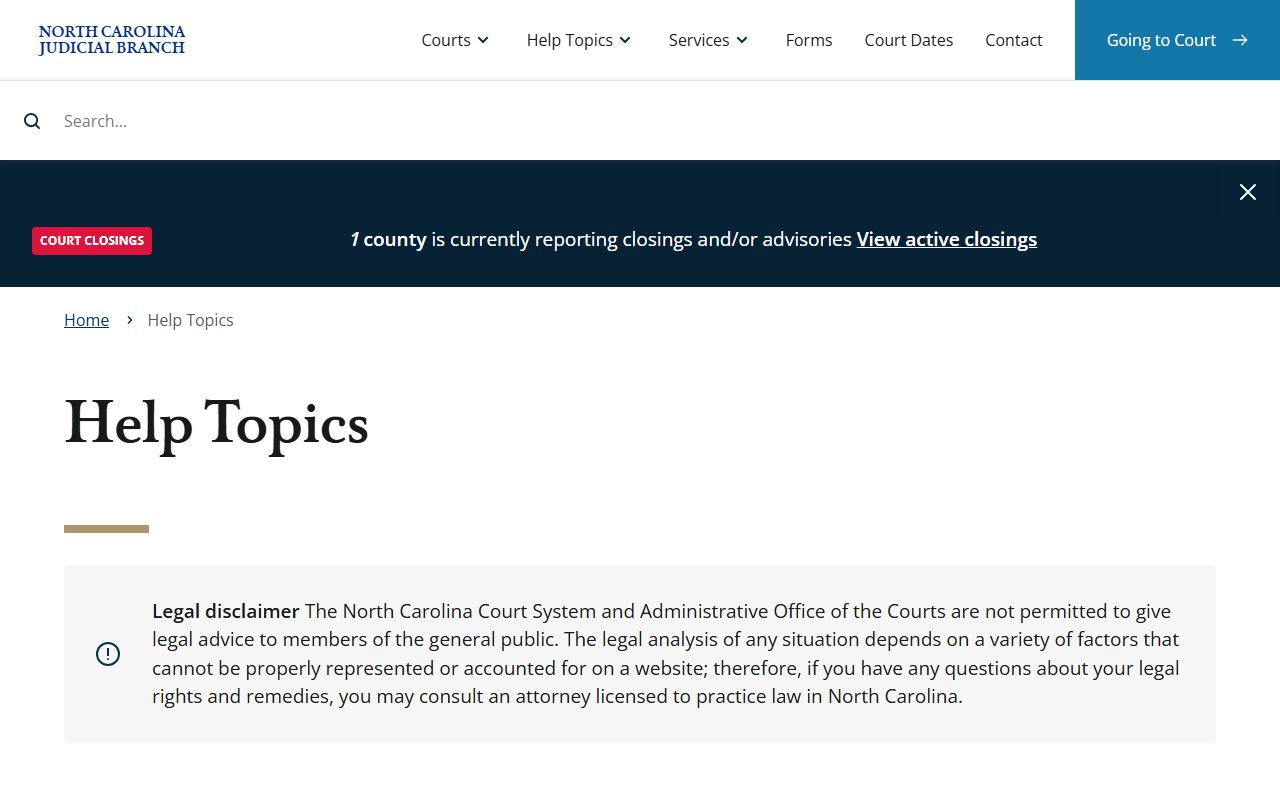
The help-topics library is organized by subject and links official forms and step-by-step guides for matters handled in both Superior Court and District Court across North Carolina, including District 14.
For more on searching court records online, see the court records page. For docket and hearing calendar searches, see court dockets. Arrest records and criminal history are covered separately at the Cumberland County arrest records page.
District Attorney and Prosecution in District 14
The District Attorney for Cumberland County is the elected prosecutor for Prosecutorial District 14. The DA's office represents the State of North Carolina in criminal matters filed in both District Court and Superior Court. Staff include assistant district attorneys, investigators, victim/witness coordinators, and administrative employees. The DA's office at (910) 475-3010 is located in the courthouse at 117 Dick Street, Fayetteville.
The District Attorney decides whether to bring criminal charges, what charges to file, and whether to offer plea agreements. The DA also coordinates with specialty courts and diversion programs for eligible defendants. Victim services are available through the DA's office; victims of crimes handled in District 14 can contact the office for information on their rights and the status of an active case.
For federal criminal matters, Cumberland County falls within the U.S. District Court for the Eastern District of North Carolina. The U.S. Attorney for the Eastern District operates out of Raleigh and maintains a Fayetteville federal courthouse at 301 Green Street. Federal cases are separate from state Superior Court and District Court cases, and their records are accessed through PACER, not the state eCourts Portal.
Terminology quick reference
- Indictment
- A grand jury's formal charge that sends a felony case to Superior Court.
- Arraignment
- The court proceeding where a defendant enters a plea of guilty, not guilty, or no contest.
- Disposition
- The final outcome of a charge, such as guilty, dismissed, or prayer for judgment continued.
- De novo appeal
- An appeal from District Court to Superior Court where the case is tried again from scratch.
- Magistrate
- A District Court judicial officer who handles initial appearances, warrants, small claims, and evictions.